






Other ecookbooks related to PHILIPPINES

Spin the globe to explore the countries ecookbooks
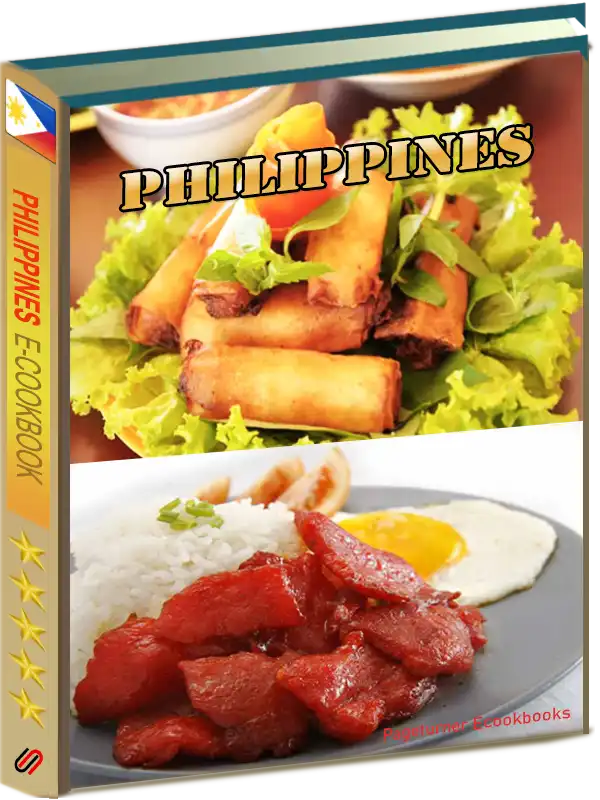
Filipino cuisine is a rich blend of flavors and cultures, with iconic dishes like Adobo, Sinigang, Lechon, and Kare-Kare reflecting the Philippines’ history and regional diversity.
Iconic Filipino Dishes
Adobo
is considered the national dish of the Philippines. It typically consists of chicken or pork marinated and stewed in vinegar, soy sauce, garlic, bay leaves, and peppercorns, often served over white rice. Variations may include coconut milk, sugar, or additional spices to balance flavors, and each household has its own unique recipe. Sinigang
is a sour soup made with tamarind, tomatoes, and various vegetables, often including pork, shrimp, or fish. Its tangy broth is a staple comfort food across the islands. Lechon
is a whole roasted pig, traditionally cooked over a charcoal fire. The skin becomes crispy while the meat remains tender and juicy. It is often served with a liver-based sauce and is a centerpiece at celebrations and festivals. Savored Journeys Kare-Kare
is a rich peanut-based stew, usually made with oxtail, tripe, and vegetables, served with bagoong (fermented shrimp paste) on the side. It is known for its nutty flavor and is a popular dish for family gatherings. Bicol Express
is a spicy pork stew from the Bicol region, cooked with coconut milk, chilies, shrimp paste, and garlic, showcasing the Filipino love for bold and spicy flavors. Bulalo
is a light beef shank soup with marrow bones, simmered until the collagen and fat enrich the broth. It is especially popular in Southern Luzon. Lumpia
are Filipino spring rolls, either fresh or fried, filled with vegetables, meat, or a combination of both, often served as appetizers or snacks. Chicharon
refers to deep-fried pork rinds or belly, crispy and savory, and is a common snack or side dish. Halo-Halo
is a famous Filipino dessert made with shaved ice, sweetened beans, fruits, jellies, and topped with leche flan or ice cream, reflecting the colorful and diverse nature of Filipino sweets.
Iconic Filipino Dishes
Adobo
is considered the national dish of the Philippines. It typically consists of chicken or pork marinated and stewed in vinegar, soy sauce, garlic, bay leaves, and peppercorns, often served over white rice. Variations may include coconut milk, sugar, or additional spices to balance flavors, and each household has its own unique recipe. Sinigang
is a sour soup made with tamarind, tomatoes, and various vegetables, often including pork, shrimp, or fish. Its tangy broth is a staple comfort food across the islands. Lechon
is a whole roasted pig, traditionally cooked over a charcoal fire. The skin becomes crispy while the meat remains tender and juicy. It is often served with a liver-based sauce and is a centerpiece at celebrations and festivals. Savored Journeys Kare-Kare
is a rich peanut-based stew, usually made with oxtail, tripe, and vegetables, served with bagoong (fermented shrimp paste) on the side. It is known for its nutty flavor and is a popular dish for family gatherings. Bicol Express
is a spicy pork stew from the Bicol region, cooked with coconut milk, chilies, shrimp paste, and garlic, showcasing the Filipino love for bold and spicy flavors. Bulalo
is a light beef shank soup with marrow bones, simmered until the collagen and fat enrich the broth. It is especially popular in Southern Luzon. Lumpia
are Filipino spring rolls, either fresh or fried, filled with vegetables, meat, or a combination of both, often served as appetizers or snacks. Chicharon
refers to deep-fried pork rinds or belly, crispy and savory, and is a common snack or side dish. Halo-Halo
is a famous Filipino dessert made with shaved ice, sweetened beans, fruits, jellies, and topped with leche flan or ice cream, reflecting the colorful and diverse nature of Filipino sweets.
conversion of liquids
Weights
Temperatures
Measures of non liquid ingredients
Non-liquid ingredients in volume converted
|
|||||||
|---|---|---|---|---|---|---|---|
Ingredient |
1 cup |
3/4 cup |
2/3 cup |
1/2 cup |
1/3 cup |
1/4 cup |
2 tablespoons |
| All-purpose wheat flour | 120 g | 90 g | 80 g | 60 g | 40 g | 30 g | 15 g |
| All-purpose sifted wheat flour | 110 g | 80 g | 70 g | 55 g | 35 g | 27 g | 13 g |
| White sugar | 200 g | 150 g | 130 g | 100 g | 65 g | 50 g | 25 g |
| Powdered sugar/Icing sugar | 100 g | 75 g | 70 g | 50 g | 35 g | 25 g | 13 g |
| Brown sugar normally packed | 180 g | 135 g | 120 g | 90 g | 60 g | 45 g | 23 g |
| Corn flour | 160 g | 120 g | 100 g | 80 g | 50 g | 40 g | 20 g |
| Cornstarch | 120 g | 90 g | 80 g | 60 g | 40 g | 30 g | 15 g |
| Rice (not-cooked) | 190 g | 140 g | 125 g | 95 g | 65 g | 48 g | 24 g |
| Macaroni (uncooked) | 140 g | 100 g | 90 g | 70 g | 45 g | 35 g | 17 g |
| Couscous (uncooked) | 180 g | 135 g | 120 g | 90 g | 60 g | 45 g | 22 g |
| Quick oatmeal (uncooked) | 90 g | 65 g | 60 g | 45 g | 30 g | 22 g | 11 g |
| Table salt | 300 g | 230 g | 200 g | 150 g | 100 g | 75 g | 40 g |
| Butter / Margarine | 240 g | 180 g | 160 g | 120 g | 80 g | 60 g | 30 g |
| Shortening | 190 g | 140 g | 125 g | 95 g | 65 g | 48 g | 24 g |
| Fruits and légumes chopped | 150 g | 110 g | 100 g | 75 g | 50 g | 40 g | 20 g |
| chopped walnuts | 150 g | 110 g | 100 g | 75 g | 50 g | 40 g | 20 g |
| Nuts /ground almonds | 120 g | 90 g | 80 g | 60 g | 40 g | 30 g | 15 g |
| Fresh bread crumbs (not packed) | 60 g | 45 g | 40 g | 30 g | 20 g | 15 g | 8 g |
| Dry bread crumbs | 150 g | 110 g | 100 g | 75 g | 50 g | 40 g | 20 g |
| Parmesan grated | 90 g | 65 g | 60 g | 45 g | 30 g | 22 g | 11 g |
| Chocolate chips | 150 g | 110 g | 100 g | 75 g | 50 g | 38 g | 19 g |






As the sun rises or sets in
PHILIPPINES
"May every sunrise hold more promise, and every sunset hold more peace."
The Pageturner Ecookbooks
Library on a world
cooking journey
0 Recipes
0 Main dishes
